2012年10月10日

Debating China’s economic future , consensus of china's eco trajectory fall between 5% ~7% , fewer expect more than 7%

Debating China's economic future

Panelists:

  • Michael Pettis, professor of finance, Peking University
  • Victor Gao, director of the China National Association of International Studies; former translator for Deng Xiaoping

Pettis said he believes China faces an inevitable and painful transition, with economic growth falling to a 3-4% rate in the next decade. Its growth model involves a systematic transfer of wealth from the household sector to support growth, and three mechanisms facilitate this process:

  1. Undervalued currency: a direct subsidy on the net export sector, but a consumption tax on households.
  2. Widening gap between Chinese wage growth and productivity growth: reduces labor's share of GDP.
  3. Financial repression: low interest rates transfer wealth from savers to borrowers.

Pettis said he believes that as marginal returns on capital slow, it will become more difficult to find economically viable projects. China's savings rate will need to decline and its consumption-to-GDP ratio must increase, which will only occur if household income captures a larger share of GDP. Pettis outlined four policy options:

  1. Reverse transfer mechanism from households to other sectors, leading to a sharp increase in the value of the yuan and potential major recession (unrealistic).
  2. Gradually reduce distortions, which could take a decade (they've run out of time).
  3. Massive privatization program to transfer wealth from state sector to households (politically difficult).
  4. Expand government debt to absorb private-sector debt (possible, but economically inefficient).

Gao countered with a far-more-upbeat assessment, though he liberally relied on history and China's great transformation over the past three decades. He said he expects China's economy to continue to grow at close to 8% thanks to four megatrends he doesn't believe will change: industrialization, modernization, urbanization and globalization.

Our view

At Schwab, we believe that as China's economy matures and shifts from over-reliance on government investment to increased private consumption as a percent of GDP, slower growth is likely the new normal. However, this transition won't be accomplished overnight; the government will likely need to enact market-based reforms and reduce its grip on the economy, and the transition could be accompanied by bumps in the road.

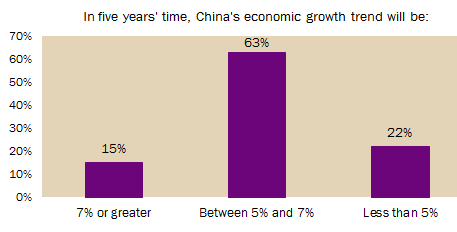
Our view on China's economic trajectory is in keeping with the results of a poll during the conference:

Source: BCA Research Inc., as of September 18, 2012.

2012年10月7日

Japan in Chinese history

Analects 论语
China 中国

Japan in Chinese history
中国历史舞台上的日本

Cross-currents
友好与不幸并存


Sep 27th 2012, 11:00 by J.J. | BEIJING


AT A restaurant just up the street from Japan's embassy on Sunday, September 23rd, local diners were lining up to take advantage of a regular weekend buffet that features tempura, sashimi, sushi and other Japanese delicacies. Just inside the door stood two prominently displayed Chinese national flags. Restaurant staff said business was getting back to normal, but added that it might recover more quickly if both ends of their street were not still blocked off by military-style barricades and police standing watch in full riot gear.

9月23号是星期日,日本大使馆街头的一家餐馆门前排起了长队,这家餐馆每周末提供自助餐,主要包括天妇罗、生鱼片、寿司等日本美食餐馆内显眼处悬挂着两面中国国旗。餐馆员工表示生意已经回归正常,并补充道如果街道两头类似军事障碍移除,全副武装的警察撤离的话,生意就会恢复的更快。

The anti-Japanese protests which roiled several Chinese cities last week have subsided, but the situation remains tense. The emotion and vitriol unleashed against Japan during last week's demonstrations was a reminder that anti-Japanese nationalism remains a potent―and potentially destabilising―force in China.

上周席卷了中国许多城市的反日抗议活动已经降温,但是局势依然紧张。此次怒气高涨,不受控制的反日游行示威提醒我们,反日民族主义在中国仍然是一股潜在的不稳定势力。

Zhou Enlai once characterised the relationship between the two countries as "2,000 years of friendship and five decades of misfortune". The latter referring to the period that began with the Sino-Japanese War of 1894-1895 and lasted to the end of Japan's occupation of China at the end of the Second World War. The history of Japan's invasion of China, in particular, remains a painful and traumatic memory for many Chinese, including very many who were not yet born at the time. Old wounds from that era are kept fresh through the media, in television dramas and movie plots, as well as in the "patriotic history" curriculum taught in the mainland's schools.

周恩来曾这样描述中日关系"两千年友好,五十年不幸"。这五十年指的是从1894-1895年中日甲午战争到二战后期日本占领中国的这一阶段。特别是日本侵华的历史给许多中国人民留下了充满痛苦和创伤的记忆,甚至对于当时并未出生的人也是如此。媒体,电视剧,电影,以及中国大陆学校的爱国主义历史课程都使过往年代的伤痛记忆犹新。

Zhou's 2,000 years of friendship refers to a long history of cultural cross-pollination. Chinese historians never tire of listing the many contributions China made to the development of Japanese politics, literature, religion and culture. Buddhism represented a key conduit for the exchange of intellectual, philosophical and aesthetic ideas between China and Japan.

周恩来所说的两千年友好指的则是文化上相互传播的悠久历史。中国历史学家总乐此不疲地罗列中国对日本政治,文学,宗教,文化等方面的诸多贡献。佛教则是中日两国思想,哲学,美学等交流的重要渠道。

Even in the bleak years that followed Japan's humiliating defeat of the Qing empire in 1895―a defeat which resulted in China's cession of both Taiwan and the chain of islets currently in dispute―thousands of Chinese students went abroad to study in Japan. Their numbers included Chiang Kai-shek, the author Lu Xun, and the female revolutionary martyr Qiu Jin. Sun Yat-sen travelled there many times, organising the Chinese overseas students and recruiting among them for his Revolutionary Alliance.

1895年清王朝的战败之耻,导致中国割让了台湾岛和如今的争议岛链。但即便在战后阴郁的几年里,依然有数千名中国学生赴日留学,其中就有蒋介石,作家鲁迅,和革命女烈士秋瑾等人。孙中山也曾多次到日本组织海外留学生,并为同盟会收纳成员。
In Japan students learned about medicine, science and the social sciences, and along the way they adopted a new vocabulary to describe the modern world. Literally. Japanese translators used their version of a Chinese Buddhist term sekai (Chinese:shijie), a combination of characters which indicated a distinction in time and space and was used to mean "generation", and adapted it to mean "the world," replacing the older Chinese term tianxia, or "all under Heaven". Last month a programme director for CCTV 1, Xu Wenguang, reminded his microblog followers of the staggering number of Chinese words, especially in the social sciences, which were likewise reimported from Japan. Japanese translators in the 19th and 20th centuries, faced with the daunting challenge posed by concepts like "society", "philosophy" and "economics", often simply borrowed classical Chinese phrases, imbuing them with new meaning along the way―creating what Victor Mair, a Sinologist, refers to as "round-trip words". Centuries after Japanese culture had incorporated Chinese characters as a major component of its own writing system, Chinese students would return from Japan with a new lexicon for scholarship of their own. 

留学生在日本攻读医学,科学技术和社会科学,期间他们学习了新的词汇,对现代世界有了新的看法。文字方面,日本译员使用中国佛教用语"sekai"(世界)替换中文的"天下"来表示世界,用原意为"一代(人)"的"sekai"这一文字组合暗示语言时间和空间的差异。上个月中央电视台一套的节目导演吴文光在其微博中告诫粉丝汉字的数量岌岌可危,尤其是在社会科学领域,中国似乎用同样的方式从日本"再进口"。面对"社会""哲学""经济"等概念的巨大挑战,19,、20世纪的日本译员通常都借用经典的汉语词语并赋予他们新的含义,制造了许多汉学家维克多•玛尔所说的"往返词"。经过数个世纪,日本文化将汉字吸收融合成为日语书写体系的主要组成部分,于是中国赴日留学生又带着专业新词汇回到中国。

Nor were the preceding 2,000 years always ones of friendship.

然而,在这悠久的2000年历史中也不光是友谊。

In the seventh century, the forces of Tang China clashed with Japanese armies in the Battle of Baekgang. The two-day battle, fought along the Geum River on the Korean peninsula, bore many of the hallmarks that would characterise future conflicts. It began as a proxy war, with China and Japan lining up behind rival powers that were vying for control of the Korean peninsula. This was to be the first of many contests China and Japan would fight in which Korea played the role of a prize.

早在公元7世纪,唐朝的军队就曾与日本军队在白江口之战中交手。在朝鲜半岛的锦江河畔,两天的交战给中日两国未来冲突打上了印记。战争起初是因中日背后操控傀儡为朝鲜半岛的控制权爆发。此次战役是中日首次交手,朝鲜半岛则是战利品

In the 13th century, the armies of Kublai Khan, the founder of the Yuan empire, carried out a pair of major raids against the Japanese "home islands" (pictured above, courtesy Fukuda Taika). Hopelessly outmatched by the Mongols, the Japanese defenders dug in and prayed. Successfully, as it were, for both times the Mongol fleets suffered enormous damage from sudden storms, divine winds that became known in Japanese as the kamikaze.

13世纪,元朝开国皇帝忽必烈汗的军队向"岛国"日本展开了两次进攻(如上图,福田大化)。节节败退的日本人只能挖好战壕默默祈祷。彷如祈祷成功,蒙古军队每次都遭到突如其来的风暴的重创。从此,有如神助的风在日本被称为kamikaze(神风)。

During the latter years of the Ming empire, the armies of Toyotomi Hideyoshi launched repeated attacks against Korea as part of a grander plan to conquer the mainland. The Koreans called on the Ming court to protect them. The result was a brutal war, featuring the use of early firearms and cannon. The casualties were enormous and the damage proved crippling to both sides―but especially to the Ming empire, which had already begun its final decline. Hideyoshi died in 1598, ending, at least for the moment, visions of a Japanese empire on the mainland.

明朝末期,作为征服大陆宏伟计划的一部分,丰臣秀吉带领军队向朝鲜人发起进攻。朝鲜人请求明朝政府提供保护。战况非常惨烈,动用了早期的火器和大炮。结果,双方伤亡惨重,尤其是已经开始没落的明朝。1598年丰臣秀吉的死亡,至少在当时结束了日本在大陆建立日本帝国的美梦。

In 1894, China and Japan once again found themselves backing opposed Korean factions and, once again, China―this time in the form of the Qing empire―saw itself acting in defence of a tributary state. Twenty-six years after the Meiji Restoration, Japan was undertaking an aggressive programme to modernise its industry and its army. It was also eager to join the ranks of Europe's imperialist nations. The Japanese victory dealt a terrible blow to both China's national pride and to those officials who had worked for decades to modernise China's own military and industrial bases. It also sparked a crisis of confidence among China's reformist elite. Never before had the Chinese nation seemed in greater danger of being carved up and divided among the world's imperial powers.

1894年,中日再次因为各自支持的朝鲜派系开战,中国的清政府又是为了保卫进贡国。明治维新后的26年里,日本在工业和军队现代化上有了长足的进步,也渴望加入欧洲帝国主义的行列。日本的胜利极大削弱了中国的民族自豪感,沉重打击了为中国军事和工业现代化奋斗了数十年的中国人,同时也使中国的改革精英们自信心受挫。此时的中华民族陷入了从未如此严峻的危险境地,似乎要被世界帝国主义强国瓜分殆尽。

In a web chat posted last week, two of our editors remarked on the similarities between 21st-century Asia and 19th-century Europe. There are parallels there, to be sure, but what is happening today between China and Japan can also be seen as the latest chapter in a centuries-old rivalry between the two pre-eminent powers in North-East Asia.

上周的一次网上交谈中,本刊两位编辑谈到21世纪亚洲同19世纪欧洲的相似之处。二者必定有相似之处,但是今日发生在中国和日本之间的事也可以被看作是东北亚最为杰出的两个国家数世纪来的斗争中的最新篇章。

If that history of conflict and violent competition seems to suggest a stormy course ahead in Sino-Japanese relations, an equally deep history of co-operation and cultural exchange must be borne in mind too. It might offer hope that China and Japan can find some way to reconcile their grievances and work together to keep a prosperous peace in the region―even when the newspaper headlines do not.

这样冲突和激烈竞争的历史似乎暗示了中日关系的暗淡前景,但是我们也不要忘了双方同样深刻,共同合作和文化交流的历史。这或许能给中日两国相互慰藉,共同致力于地区和平与繁荣带来一线生机――尽管这并不被媒体看好。

2012年9月14日

Rumours around the Politburo

Rumours around the Politburo

Seriously questionable

Sep 11th 2012, 10:46 by T.P. | BEIJING

"I HOPE you will raise serious questions."

This was the reply a spokesman for the foreign ministry, Hong Lei, gave on Tuesday afternoon at a press briefing in Beijing. His answer struck many of the reporters who had gathered for a regular daily session as rather odd, given that the question he had been asked seemed anything but frivolous. It was from a foreign reporter who, after noting accurately that Xi Jinping's disappearance from public view in recent days had prompted many rumours, asked whether it was related to any instability within the Chinese government, and indeed whether Mr Xi was still alive.

A clear answer as to Mr Xi's whereabouts or condition would have put the matter quickly to rest. But no such answer was forthcoming. Asked moments earlier whether Mr Xi had been injured or whether he was "fit and well", Mr Hong replied tersely, "I have no information on that to provide to you."

And with that Mr Hong was done. Reporters were not, but to all subsequent questions on the topic, Mr Hong replied simply that he had already answered.

Questions do linger, and not only about Mr Xi's health. That in itself is of course a matter of great import. He is currently China's vice president, looks a bullish 59 years old, and has been groomed as the man who in coming months will replace Hu Jintao, the outgoing president and Communist Party chief, to lead China for the next ten years.

Beyond the immediate questions about Mr Xi's physical and political well-being loom other disturbing questions about the widening mismatch between China's Leninist politics and black-box opacity on the one hand, and its growing economic and political importance on the other.

Last week, when Mr Xi cancelled a scheduled meeting with America's visiting secretary of state, Hillary Clinton, it seemed possible that it was a snub designed to express dissatisfaction over policy disputes. But taking into account a meeting with the prime minister with Singapore, which was also cancelled, his non-appearance at a meeting with the Danish prime minister, where at least some people had expected him, and then another one that went by the board entirely―between Mr Xi and a Russian official―speculation ran wild in some of Hong Kong's and Taiwan's more freewheeling news outlets. An official account of a Central Military Commission session held on September 8th to discuss the earthquakes in Guizhou and Yunnan did not show him in attendance, though he is the CMC's vice chairman. China's information commissars responded to all this not with clearer explanations, but by blocking related search terms on the internet.

Among the tales spun from these mills were reports that Mr Xi had injured his back (while swimming or playing football―take your pick). Or that he had suffered a stroke. Or a heart attack (mild or severe―again, take your pick). Or that he was injured in a politically motivated attack while in his car. Or that he has merely been sidelined politically in last-minute manoeuvring in the delicate political transition process that is now under way.

These rumours bear repeating not because any have been reported with anything like corroborating information, but because they illustrate the nature of the information vacuum that China's system produces, and the nature of what rushes in to fill it.

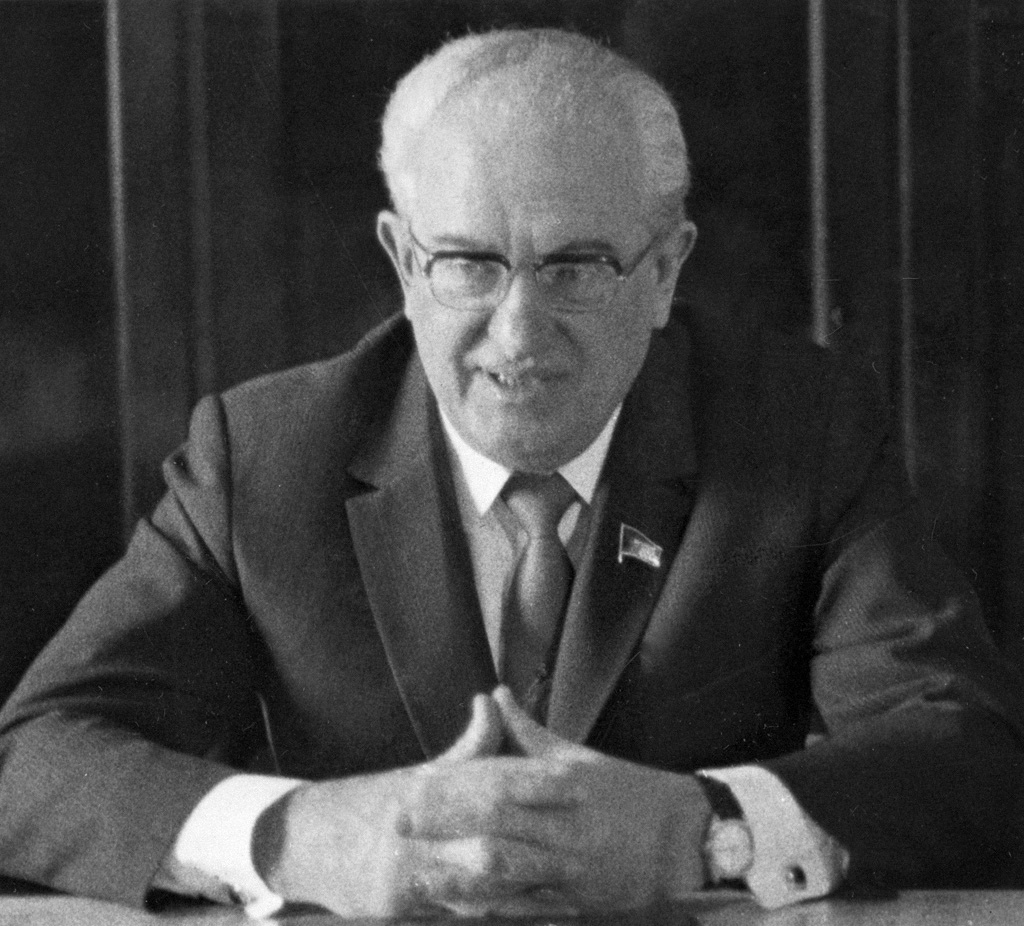
In the early 1980s, Soviet government spokesman drew ridicule every time they tried to explain away the prolonged disappearance of one of the USSR's frail and elderly leaders. They tended to say that Yuri Andropov or Konstantin Chernenko had a cold. It was laughable, but also disconcerting for the rest of the world to be left in the dark as to who was running one of the world's two nuclear-armed superpowers.

China is not only a nuclear-armed superpower today but also an economic and industrial behemoth. In a world where events and information move so much faster than they did in the days of Yuri Andropov and his head colds, simple questions about the condition and the whereabouts of a top leader deserve to be taken seriously.

(Picture credit: Wikimedia Commons, AFP)

2012年8月13日

10 Chinese Brands You Must Know

10 Chinese Brands You Must Know

Beijing has begun to push consumption to kick-start its economy. Here's are tomorrow's big beneficiaries.


Shopping is still an unfamiliar pastime for the Chinese. Centuries of Confucianism emphasize the cultivation of virtue and ethics, not the creation of a snazzier wardrobe. Just a generation ago, Mao Zedong's Communist government outlawed personal property and purged the land of private possessions.

These days, however, Beijing would like nothing more than for 1.4 billion Chinese to shop until they drop -- or at least until its economy perks up. Having tripled China's gross domestic product over the past decade, the government now has pronounced that the country's heavy reliance on exports and investment for growth is "unstable, unbalanced, and unsustainable." Friday's disappointing Chinese trade numbers were just the latest evidence. Private consumption made up just 35% of GDP last year, down from 46% in 2000, and goosing domestic spending has taken on new urgency now that Europeans and Americans are no longer gobbling up goods churned out by China's factories. It's an unusual message from a communist regime: Materialism is the new patriotism.

As China tries to make consumption more conspicuous, Barron's decided to window-shop for 10 publicly traded domestic brands that stand to prosper. Make no mistake, many popular brands in China right now are foreign. General Motors (ticker: GM) sells more cars there than in the U.S., Apple's (AAPL) mobbed stores require security rivaling a U2 concert at Madison Square Garden, and Coca-Cola (KO) is as at home in China as anywhere. But as China's consumer class grows, the biggest beneficiaries will be its home-grown labels; by extension their stock prices should also do well over time. Consider Coke's 7,000% rise over roughly four decades or Apple's 5,000% gain in two.

By shorter-term valuation measures, the stocks of some of our Chinese picks aren't cheap (see table above) and, in a few cases, their immediate prospects are challenging. Some companies on our list are typical of an emerging economic power: Lenovo (992.Hong Kong), for example, is China's biggest computer maker, and Baidu (BIDU) is essentially China's Google (GOOG). Others are unique to Earth's most populous nation: Moutai(600519.China) makes a lethally strong liquor first mass-produced during the Qing dynasty in the 17th century, and today is the toast of choice for special occasions.Yunnan Baiyao (000538.China) produces traditional Chinese medicines that are finding their way into everything from toothpaste to tea.

Barron's Graphics

There couldn't be a better time for consumers to plunk down more yuan. China's economic growth has slowed to a three-year low near 7.6%, but it's strongly supported by 13% year-over-year growth in retail sales. Although the country's economy is the world's second-largest, per-capita income ranks just 92nd. Beijing desperately needs income and spending to increase, not just to rebalance its economy, but also to appease its citizens and stave off social unrest. To encourage people to spend more and save less for a rainy day, Beijing is expanding retirement pension coverage from 250 million of its people today to 350 million by 2015. Expect further tax reforms and consumer subsidies. "As part of the long-term agenda, we anticipate accelerated enhancement of social welfare, pension schemes, education, health care, and personal lending," says Joseph Tang, Invesco's Hong Kong-based investment director, who sees discretionary spending outpacing GDP for years to come.

China's relentless urbanization will induce more of its citizens to open their wallets. By 2020, about 850 million Chinese will live in urban areas, up from 650 million in 2010, says a McKinsey study. One in every five city-dwellers will be a first-generation migrant, and the range of goods catering to this urban sprawl makes brand choices a bigger individual statement. From Shanghai to Shenzhen, you are what you wear, where you shop, and what you drive.

In some cases, there's still time for a local champion to emerge. For instance, our list lacks domestic luxury fashion brands, since most Chinese labels don't yet have the rich history to lure fashionistas away from Chanel, Hermes, and Gucci. Women's fashion is similarly commoditized, with little consumer loyalty.Domestic food brands are growing fast but susceptible to food-safety flubs, from melamine in milk powder to exploding watermelons over-sprayed with growth chemicals. And while the Chinese are becoming zealous travelers, China's big three airlines haven't built much of a reputation�except for surly service and rubbery cuisine.

In most areas, however, we found our favorite. Here's our selection of China's 10 top brands (in alphabetical order):

Baidu

China's dominant Internet search engine controls 79% of its US$4 billion search market. Baidu -- whose name means "hundreds of times," and comes from a Song Dynasty poem about a man's search for an elusive beauty -- has benefited from Google's 2010 withdrawal from the mainland over a censorship spat with Beijing. But the brand also "owes its popularity to deep familiarity with the subtleties of Chinese language and culture," notes Millward Brown, a global brand research agency. The keystrokes to type requests in Mandarin are different from those for English. Baidu's grasp of the nuances of Asian-language search requests explains why it has also launched a Japanese search engine, its first outside China.

Baidu's next challenge: Cornering the newer, faster-growing market for mobile-device searches, where its share is just less than half. As a result, the stock currently trades at a much more attractive 27.7 times projected profit, well off the median of 54 times since its 2005 debut on Nasdaq.

China Mobile

The company has more than 683 million customers and the world's largest telecom network -- it even provided coverage from 21,325 feet when the Olympic torch traversed Mount Everest on its way to Beijing for the 2008 Summer Games. Its US$233 billion market cap is the second largest in Asia. But it's a behemoth at a crossroads. Its third-generation network is based on a standard used only in China, so it can't match the range of rival smartphones, including Apple's coveted iPhones. Subscriber growth is slowing, and new software on mobile devices is rapidly changing how people communicate.

Still, China Mobile (941.Hong Kong) has a massive war chest, including $48 billion in net cash, and is developing a quicker fourth-generation network. Americans tend to see their telecom providers as an annoyance to be endured, but in China, where news is state-controlled and information scarcer, the locals have a stronger attachment to their phones. For now, callers also can't switch providers easily without changing their phone numbers, which helps China Mobile hold on to customers.

The shares late in 2011 drew in respected value investors like AQR Capital Management's Cliff Asness and Dreman Value Management's David Dreman. The P/E ratio, at about 12, hasn't changed much since.

Great Wall Motor

Many Chinese would rather drive Audis, BMWs, or Mercedes-Benzes, but just 2% of the urban population has disposable annual household income of more than $34,000. The 82% who have between $6,000 and $16,000 care more about value.

Among local auto makers, Geely (175.Hong Kong) may have the more recognizable brand, since it makes passenger cars, including its charming hatchback, the "Panda." But Great Wall is China's leading SUV and truck maker and has a reputation for delivering good value. "I actually think Great Wall has a better quality perception in SUVs and trucks than Geely does in cars," says Earl Yen, portfolio manager of Shanghai-based CSV Capital Partners.

First-half results trumped estimates, with sales rising 29% and profit jumping 30%. Higher-margin SUVs drove 41% of sales, up from 33% a year ago. Car ownership in China is still low by global standards -- one for every 17 people -- and Great Wall is exporting more to Southeast Asia and the Middle East. No wonder shares (2333.Hong Kong) are up 49% this year, leaving other Hong Kong-listed stocks in its rear-view mirror.

Haier

For a household name, Haier is a bit of a mystery. It's the world's biggest appliance brand and owns 8% of the global market for white goods. Its Hong Kong-listed unit, Haier Electronics (1169.Hong Kong), is China's biggest maker of washing machines and heaters, while Shanghai-listed Qingdao Haier (600690.China) makes air conditioners and refrigerators. Yet analysts can't pinpoint the value of the state-owned parent, a collective belonging to employees (who do not receive dividends or know exactly what they own).

Even so, the brand -- Haier comes from the Chinese pronunciation of Liebherr Group, an early German partner -- is based on its range of products -- everything from robots to walk-in wine coolers -- and attentive after-sales service. Factory locations stretch from Southeast Asia to South Carolina. A network of more than 7,000 mainland stores helps sell Haier and third-party appliances in small cities and rural areas. Management's boast: it can deliver anything within 200 kilometers (124 miles) of its stores in 24 hours.

Such a reputation comes at a premium. Haier Electronics, for instance, fetches 10.6 times 2012 profit, above 7.7 times for its peers. Yet a government "Home Appliances to the Countryside" program that subsidizes purchases will expire in January 2013 and may have pulled sales into 2012. The soft housing market also is a flashing yellow light.

Lenovo

Some time in 2012 Lenovo should overtake Hewlett-Packard (HPQ) as the world's biggest personal-computer producer. The Beijing outfit, which bought IBM's (IBM) ThinkPad business in 2005, already sells one in three PCs in China, and its share of global PC sales jumped to 14% from 10% in 2011. An amazing 93% of its $30 billion annual revenue comes from computers, but it's starting to make other gadgets, too.

Shares of the future No. 1 trade at 14 times fiscal 2013 profit, versus peers' 9-10 times. But the stock has skidded 20% since early May as year-over-year growth in Chinese PC demand slowed from double digits to 5%.

Count on a 2013 recovery, however, as Chinese broadband service becomes more widespread and affordable, and as PC makers unveil new products. Internet penetration -- a proxy for computer use -- also remains low in China at about 36%, compared with nearly 80% in the U.S., and Lenovo's familiar name will give it an edge in winning over newer rural customers.

Great Wall SUV: Nelson Ching / Bloomberg News; Li Ning: Trevor Jones / Getty Images; Moutai: Imagechina / Corbis

Branded: (Clockwise from left) Tsingtao beer, Great Wall SUV, Li Ning's founder, and Henry Kissinger's favorite, Moutai

Li Ning

When China went to her maiden Olympics in 1984, millions watched on TV as the gymnast Li Ning won six medals, including three golds, to become the country's most decorated athlete. The "prince of gymnastics" put his fame to shrewd use, and today Li Ning is China's second most recognized sporting-goods brand, after Nike (NKE).

Now, however, the respected brand is in danger of getting left off the medals podium. It over-expanded after the 2008 Beijing Olympics (when its founder was airlifted into the opening ceremony to light the Olympic cauldron). Net income surged 52% in 2008, but by 2011, inventories had piled up just as Chinese shoppers were turning to cheaper Western brands. Profit plunged 65% last year, and shares (2331.Hong Kong) today are 4.68 Hong Kong dollars (US$0.60), down from HK$31 in mid-2010.

Management's task: To bring its apparel and equipment to market more quickly and cheaply, shift from the crowded casual wear segment toward higher-margin "performance gear" made of more sophisticated material, and appeal to younger people. Li Ning now sponsors the Chinese Basketball Association and is revamping with capital from private-equity firm TPG. Profit forecasts still look high, says Morgan Stanley analyst Robert Lin, but "the company has strong brand equity, boding well for top-line gains and margin growth in the long term."

Moutai

Declared a national drink in 1951, centuries-old moutai is a clear, yellowish liquor fermented from sorghum. It's drunk in vast quantities as shots -- "gan bei," or bottoms up! -- and the knockout alcoholic level (as high as 53% of volume, versus about 12% for red wine) makes you forget it smells like soy sauce. No wonder Henry Kissinger once told Deng Xiaoping: "If we drink enough Moutai, we can solve anything."

Kweichow Moutai, the state-owned giant that makes its namesake liquors, saw profit jump 74% in 2011 to $1.4 billion. Revenue expanded 58%. There is some worry that Beijing's push to stamp out bribes and tighten its entertainment budget could cut into Moutai's exuberant sales.

The company is opening more self-operated stores to better control its distribution and fight counterfeiting. Its Shanghai-listed shares trade near an all-time high and fetch 19 times 2012 profit, above 18.6 times for Diageo and about 16 times for global-liquor companies. Still, Credit Suisse says Moutai deserves the top-shelf premium and makes it the No. 1 pick among Chinese white spirits.

Tencent

When reigning badminton world champion Yu Yang was disqualified from the London Olympics for tanking a match, she quit her sport in modern Chinese fashion: She announced her retirement -- "Bye bye, my beloved badminton" -- on her Tencent microblog.

In a country where news is scrubbed by Beijing and large gatherings frowned upon, Tencent―China's biggest and most diversified Internet company -- has become the people's public square. Tencent has the world's largest customer base: 721 million registered users for its instant messaging service, 552 million social-networking users, and 373 million micro-bloggers like Yu Yang. Nearly 72% of revenue comes from an Internet services unit dominated by a maturing online games platform, so Tencent has expanded into other areas, like faster-growing e-commerce, online advertising, and mobile services by providing ringtones and text messages.

"Tencent has so far been the most successful company at monetizing its user base," says Invesco's Tang. Revenue grew 45% last year to $4.5 billion, while operating profit rose 25%. Shares (700.Hong Kong) are up 54% this year and aren't cheap at 27 times 2012 profit, versus 16 times for global Internet stocks and 15 times for Google. But that's a vote of confidence that Tencent will stay ahead of China's maturing Internet boom.

Tsingtao Brewery

The average Chinese drinks less than half the beer consumed by an American, and just a third of that guzzled by a German. Yet China's vast population makes it by far the world's biggest beer market. China Resources Enterprise (291.Hong Kong) may have a 22% market share from peddling cheap beers. But it's the No. 2 volume leader, Tsingtao (market share: 14%), that has the older, more famous brand -- and the coveted toehold in the faster-growing premium aisle.

Tsingtao is a Chinese beer with German grandparents. Founded in 1903 by Anglo-German settlers, it was reportedly brewed to strict German standards and with mineral water from China's Laoshan Spring. Even today, that hoppy Pilsner taste helps it wash down quickly and easily.

Chinese beer consumption climbed 5% last year, but Tsingtao's volume grew 13% while profit increased 14%. Grain costs are a concern, but brewers can raise prices, and at about $0.80 a liter, average selling prices of beer in China are still low compared with the global average of $2.20. No wonder Japanese breweries are circling, with Asahi taking a 20% stake and Suntory forming a joint venture with Tsingtao. The stock (168.Hong Kong) trades at a full-bodied 25 times profit.

Yunnan Baiyao

Legend has it that Yunnan Baiyao, which means "white medicine from Yunnan province," was concocted in 1902 by a man who scoured the countryside, testing bushels of herbs. From ginseng and other astringent roots he made a white powder widely used to stem bleeding when China fought Japan during World War II. After he died, his widow handed the secret formula to the government.

But just how do you sell traditional Chinese medicine in the 21st century? The state-owned company began putting it in capsules, bandages, skin creams and beverages. After a five-year push, the brand has snagged 10% of China's toothpaste market, and is now targeting the bigger shampoo and pharma-cosmetics segment.

From 2006 to 2011, sales more than tripled to $1.8 billion, while profit quadrupled. Raw-material inflation bears watching, and margins could fall as Yunnan competes in the crowded hair-care sector. But Morgan Stanley sees revenue growing 14% in 2012 and profit rising 24%. The stock reflects its recent success, trading at 28 times earnings.

These are high expectations, but pressure is a privilege all big brands must embrace. 

E-mail: editors@barrons.com